Pull a Block
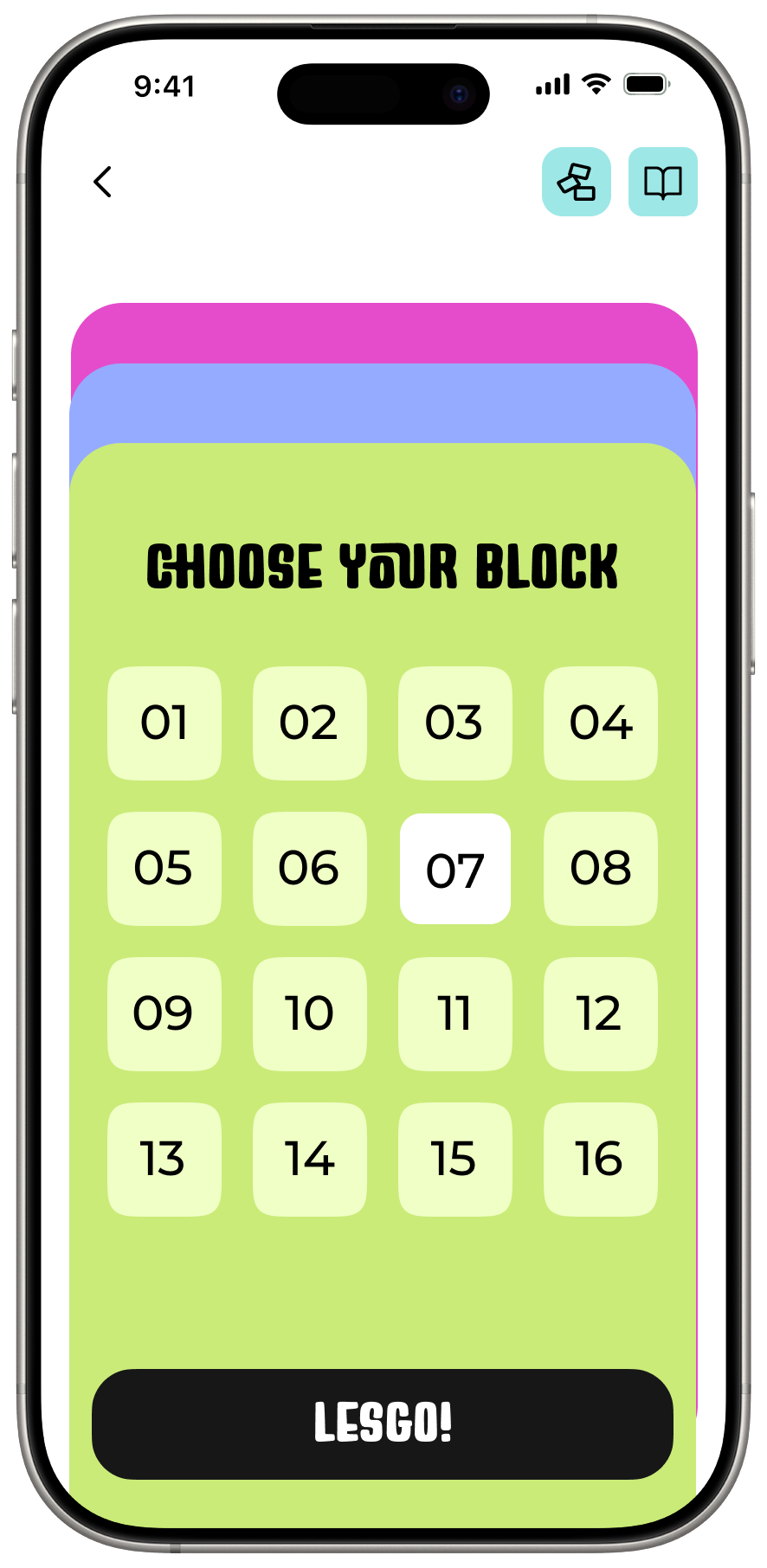
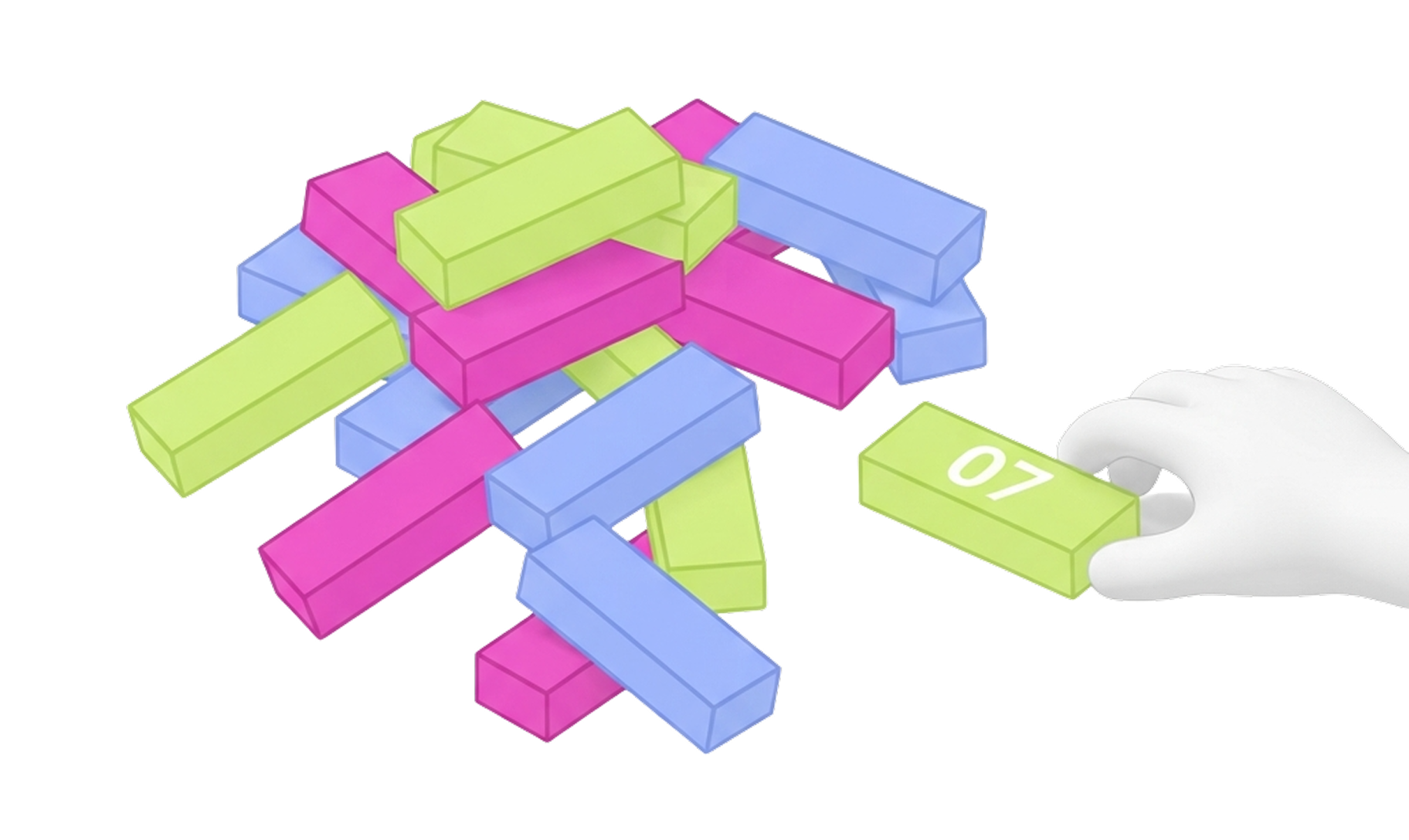
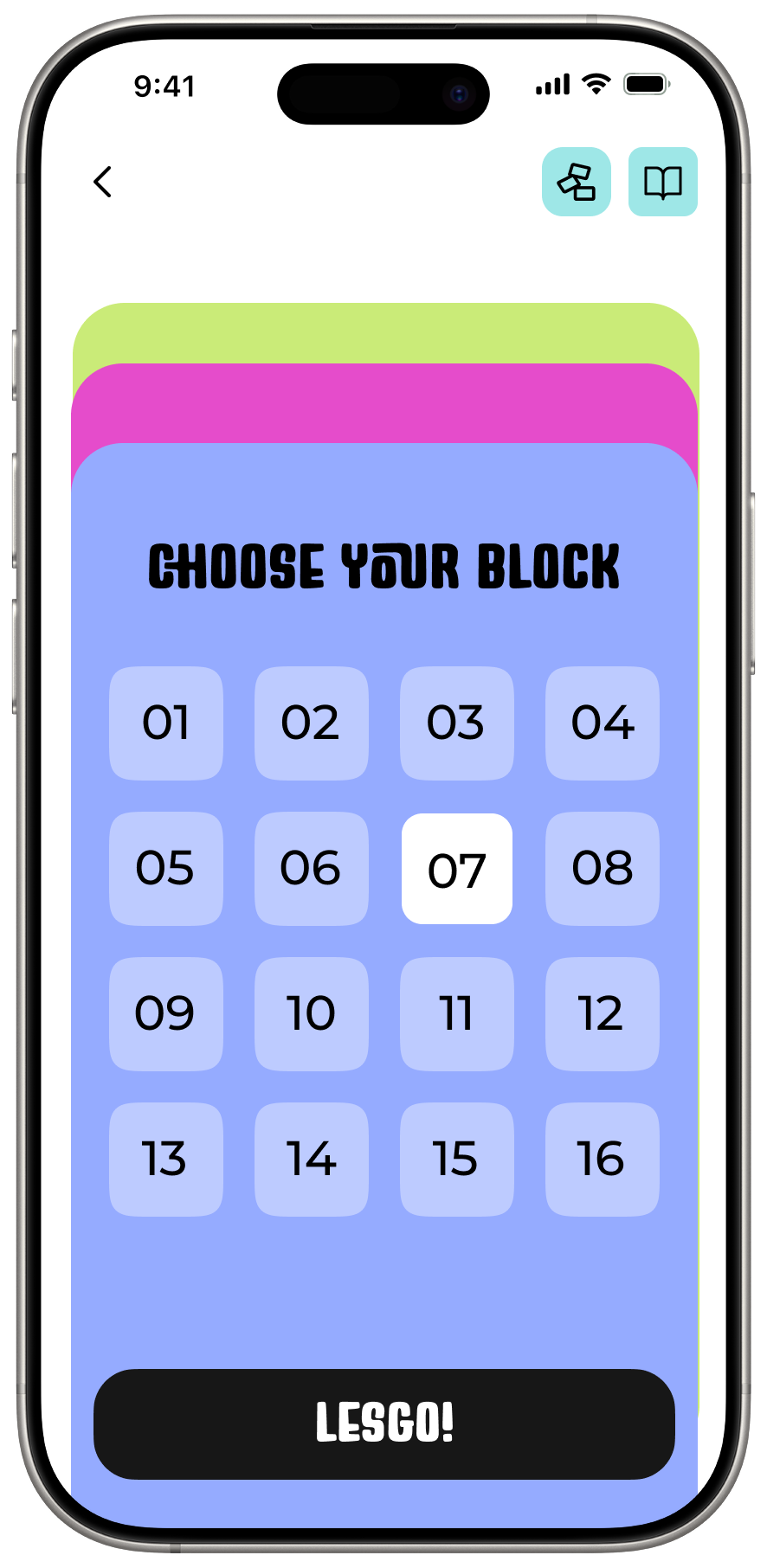
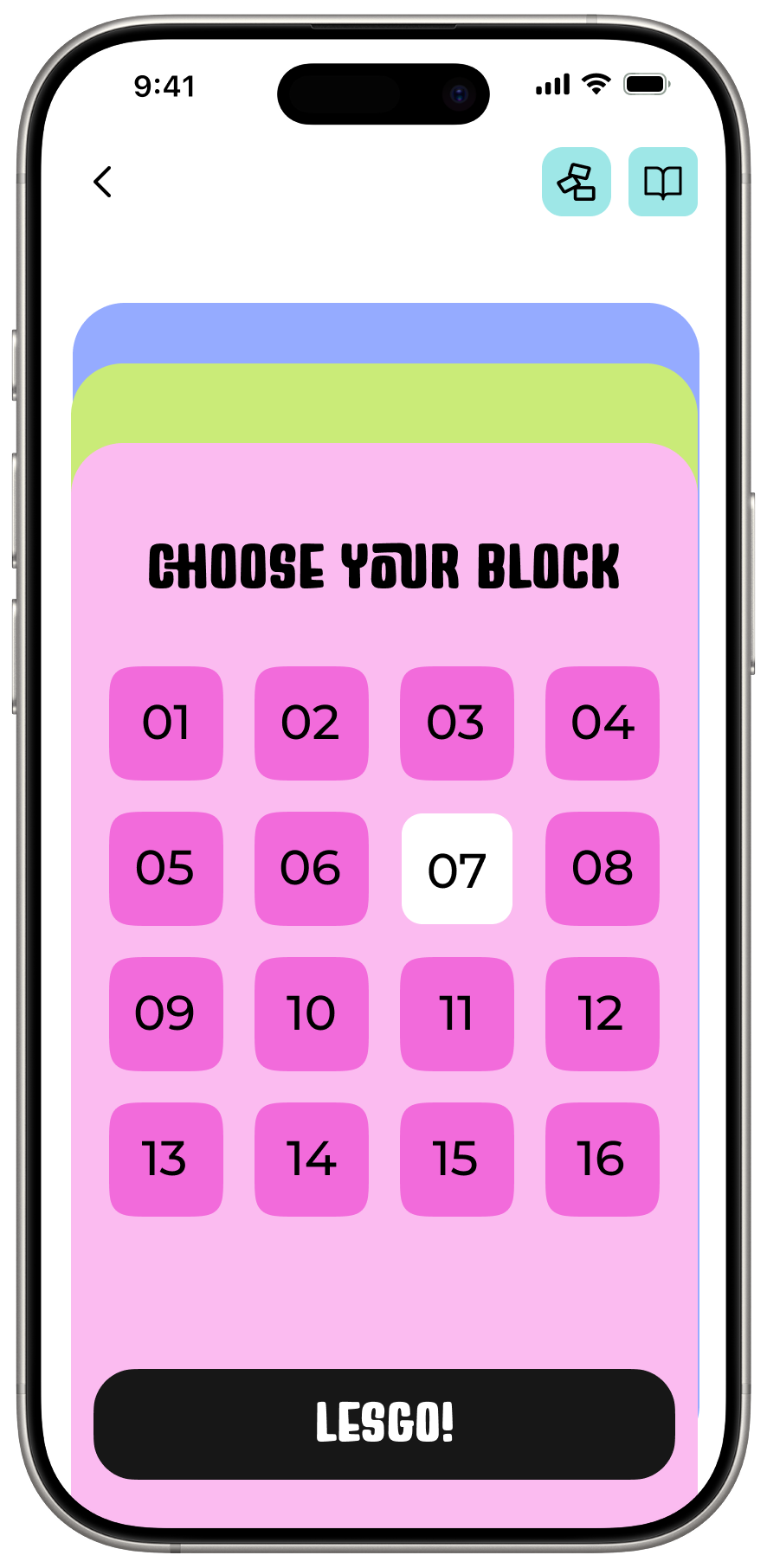
Every block has a number printed on it. Pull one out and choose the number into the app
This input triggers the situation
A Jenga game where bad money decisions make your tower wobble

of Indian adults aren’t financially literate
of school students met a basic financial literacy benchmark
of class 6-8 students didn’t know that buying on EMI is taking a loan
Schools teach money as abstract math, while families avoid discussing it until adulthood. Without a safe space to experience financial trade-offs, young adults only discover the consequences of poor financial habits when their mistakes start costing real money and real debt
Want independence but don't always understand the consequences of financial decisions.


Gameplay relies on dice rolls & luck
Encourage predatory hoarding & bankrupting peers
Teach zero real-world budgetary cause & effect


Prepaid debit cards tied to real currency
High parental hesitation to grant minors financial independence
Without built-in habits, teens just use cards for fast food
Pre-teens and teens (10-16) want financial independence, but parents mostly give money only when needed, which creates tension between freedom and control.
These teens understand basic ideas like saving and needs vs wants, but struggle with real-world finance, topics like taxes, interest, and investing feel confusing & advanced.
They rely on memory or piggy banks to track money, which leads to forgetting spends, running out unexpectedly & feeling stressed.
They are strongly motivated to earn and grow money, but they engage only when learning feels interactive & game-like rather than lecture-based.

Handles his own spending but parents set the limits
Gets pocket money from parents + occasional festival cash
Curious about money but has never been taught how it actually works
Owns a smartphone but supervised
"I know the terms... but not what they actually mean."
How might we let teens practise money decisions and feel what they cost, without risking real money?

We started off with board game concepts, but they all went back to being repetitive, lengthy and predictable
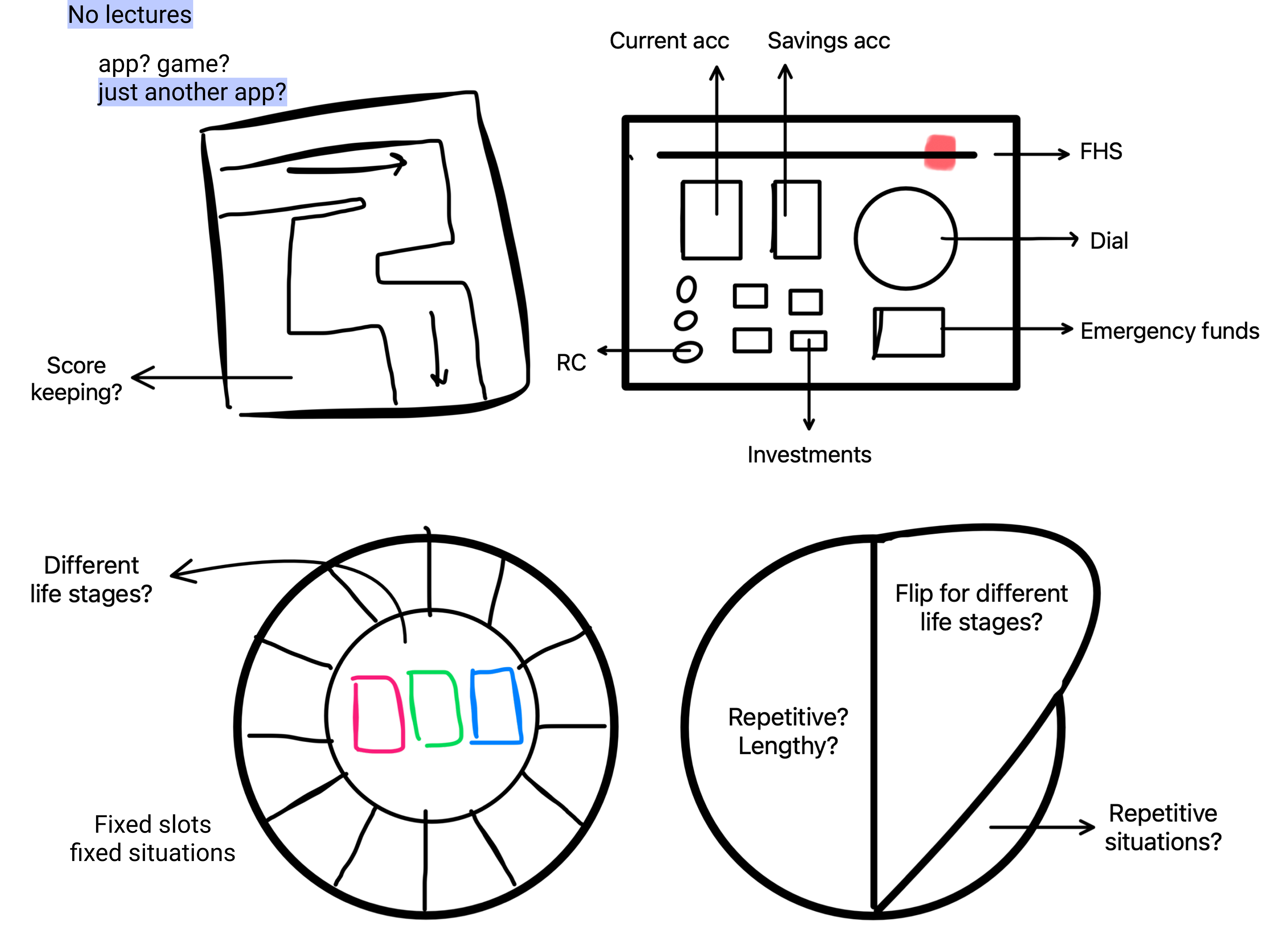
We went back to what the boards couldn’t do and wrote it on one sticky note: personal growth, real-life situations, unlimited situations, unpredictability
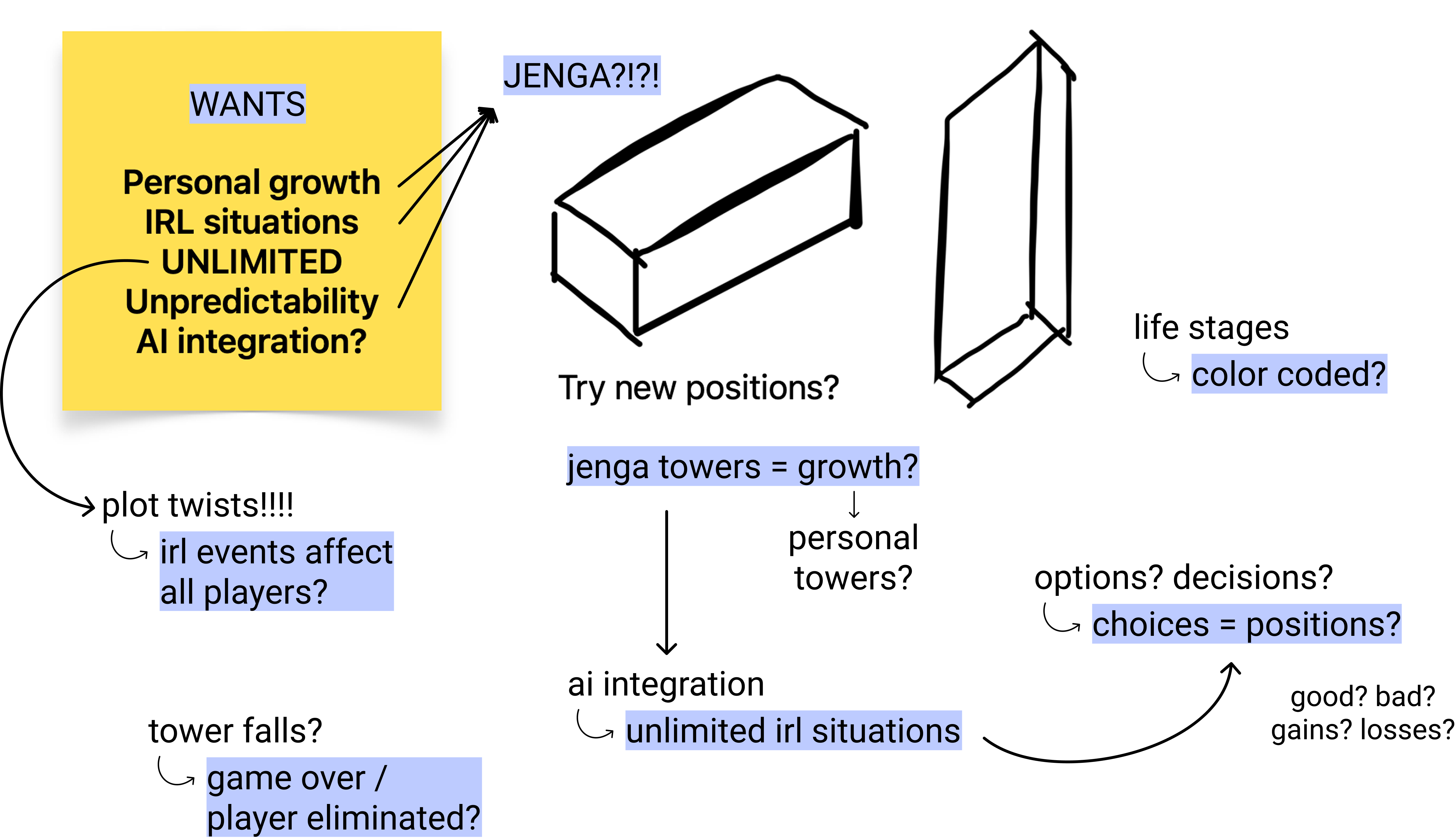
A phygital experience pairing Jenga with generative AI scenario. Every money decision dictates the tower's physical balance: smart choices keep it steady, while reckless spending forces shaky placements until it falls. Dilemmas scale across three life stages - school, teen years, and college.
Every block has a number printed on it. Pull one out and choose the number into the app
This input triggers the situation
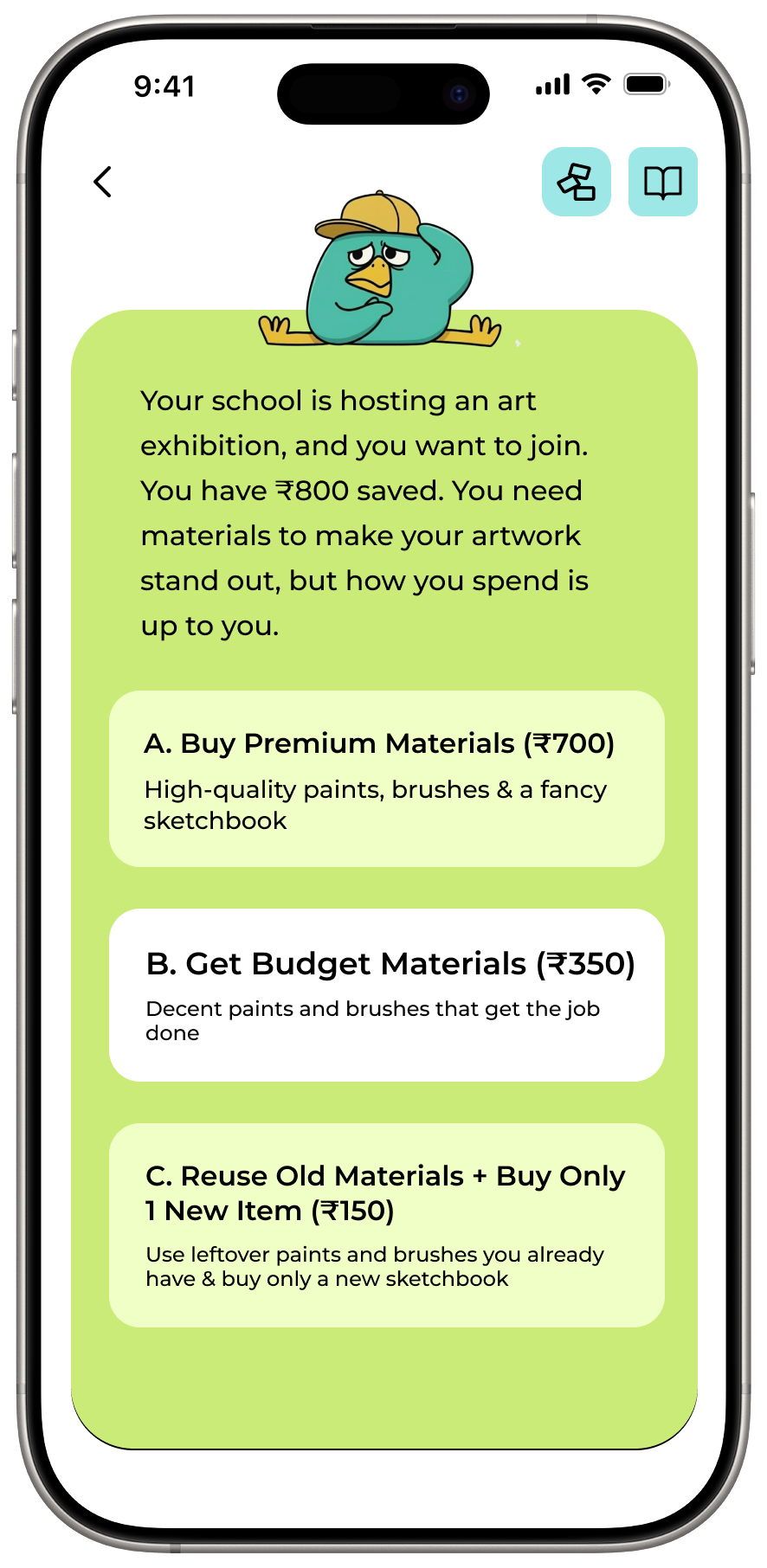
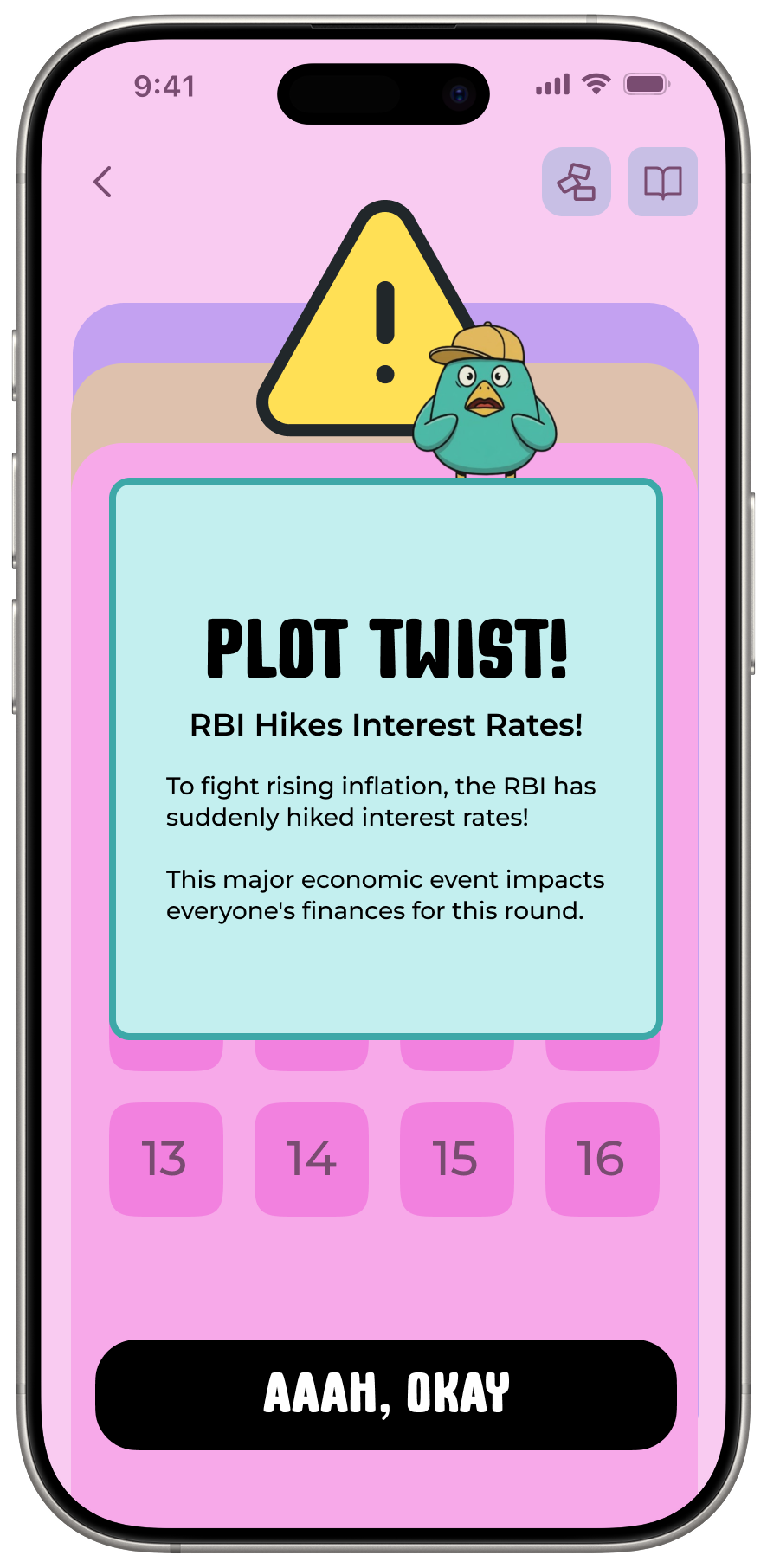
The app’s AI writes a money decision that fits your age and the block you pulled.
You read the options and pick one


You read the options and pick one
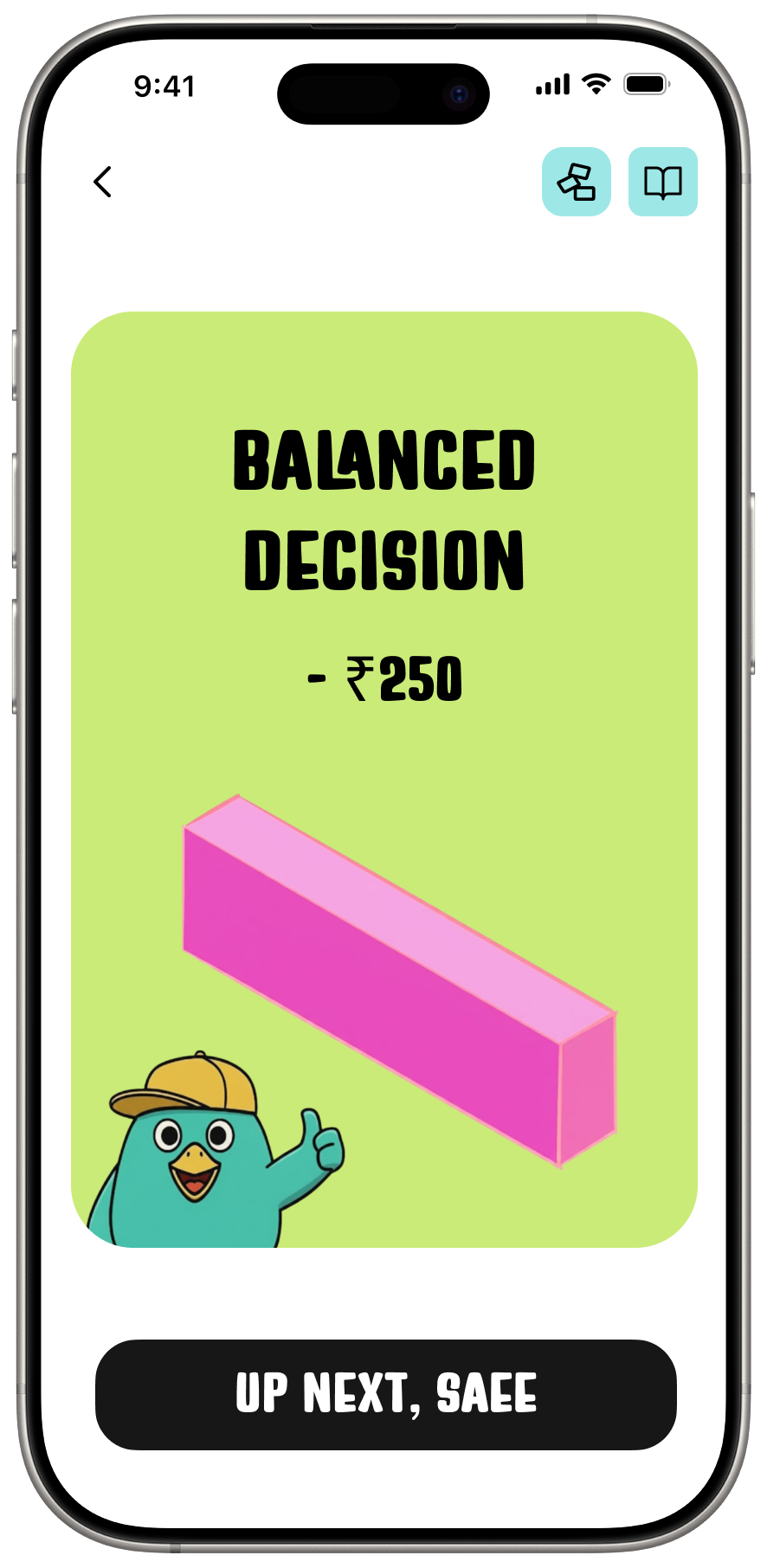
The app rates your choice and tells you how to place the block on your tower
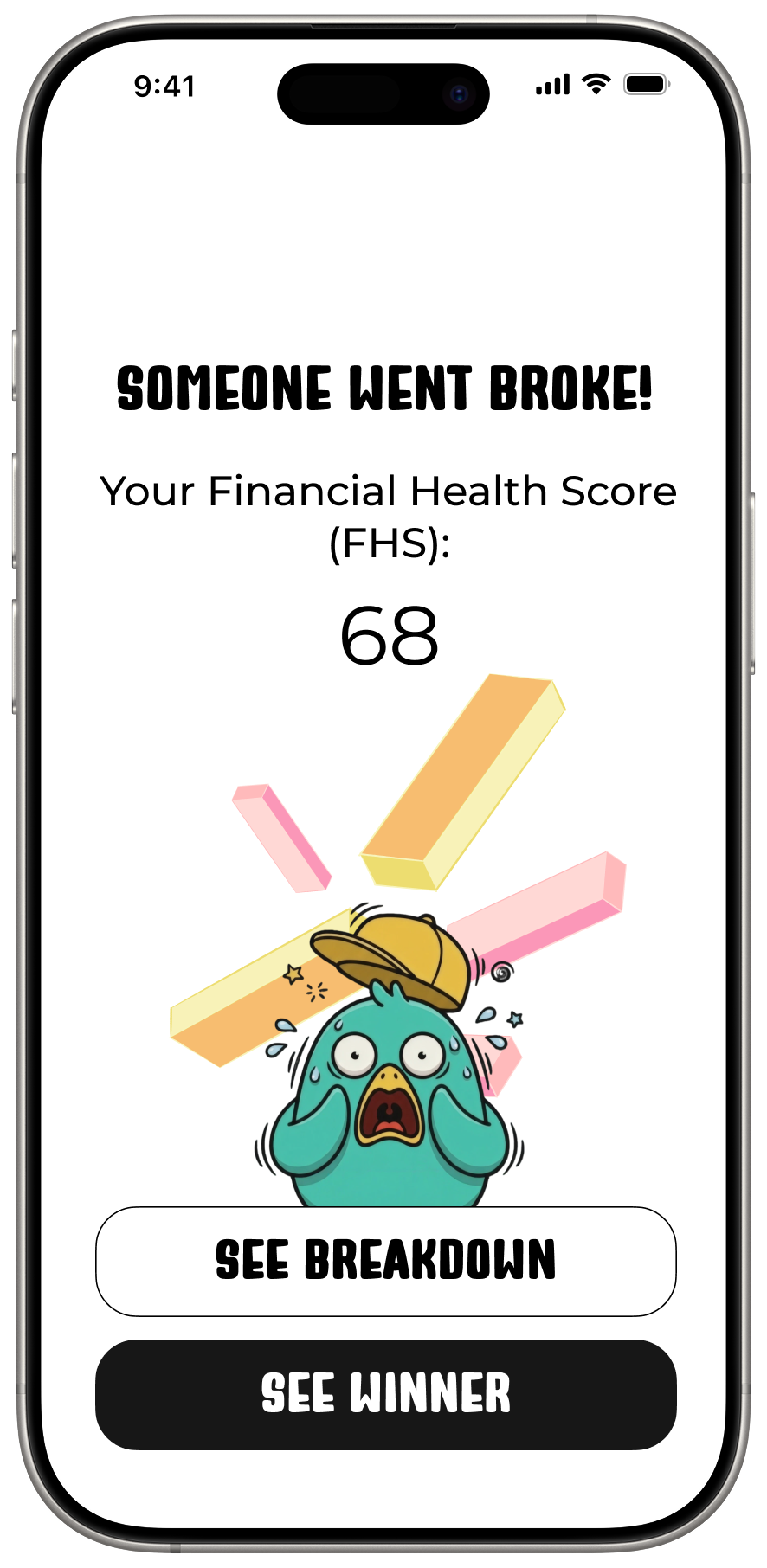

Bad decisions pile up, and eventually the tower falls. The app calculates every player’s FHS (Financial Health Score) by how healthy their budget is
The player with highest FHS wins
 View
Adding a feature, or changing who can use it, meant asking a developer and waiting. The more features, the longer the wait.
 View
Nobody tells them where to sit. They already know. Across 59 participants, kids turned out not to be rejecting each other at all. They were avoiding the teasing.
 View
Sonia says “look for flights for this.” She never says where or when. Aris reads the group chat to work out what “this” means.