Deconstructing Gender-Based Peer Exclusion in Primary Schools
Who Are You
Sitting With?
(01) The Problem
Nobody tells them where to sit.
They already know.
By age 6,
kids spend
10x more
time playing
with their
own gender.
By ages 8-12,
exclusion becomes
automatic, nudged
by adult framing &
normalized by
peers.
How children
interact on the
playground mirrors
how adults later
shape relationships
& workplace
collaboration.
So,
when does a child feel safe enough to
work with the other gender?
(02) Research Question, Hypothesis
(03) Hypothesis
Children do not avoid the opposite gender because of dislike, but because of fear of peer judgement; reducing social sanctions will unlock their willingness to collaborate.
(04) Research Method
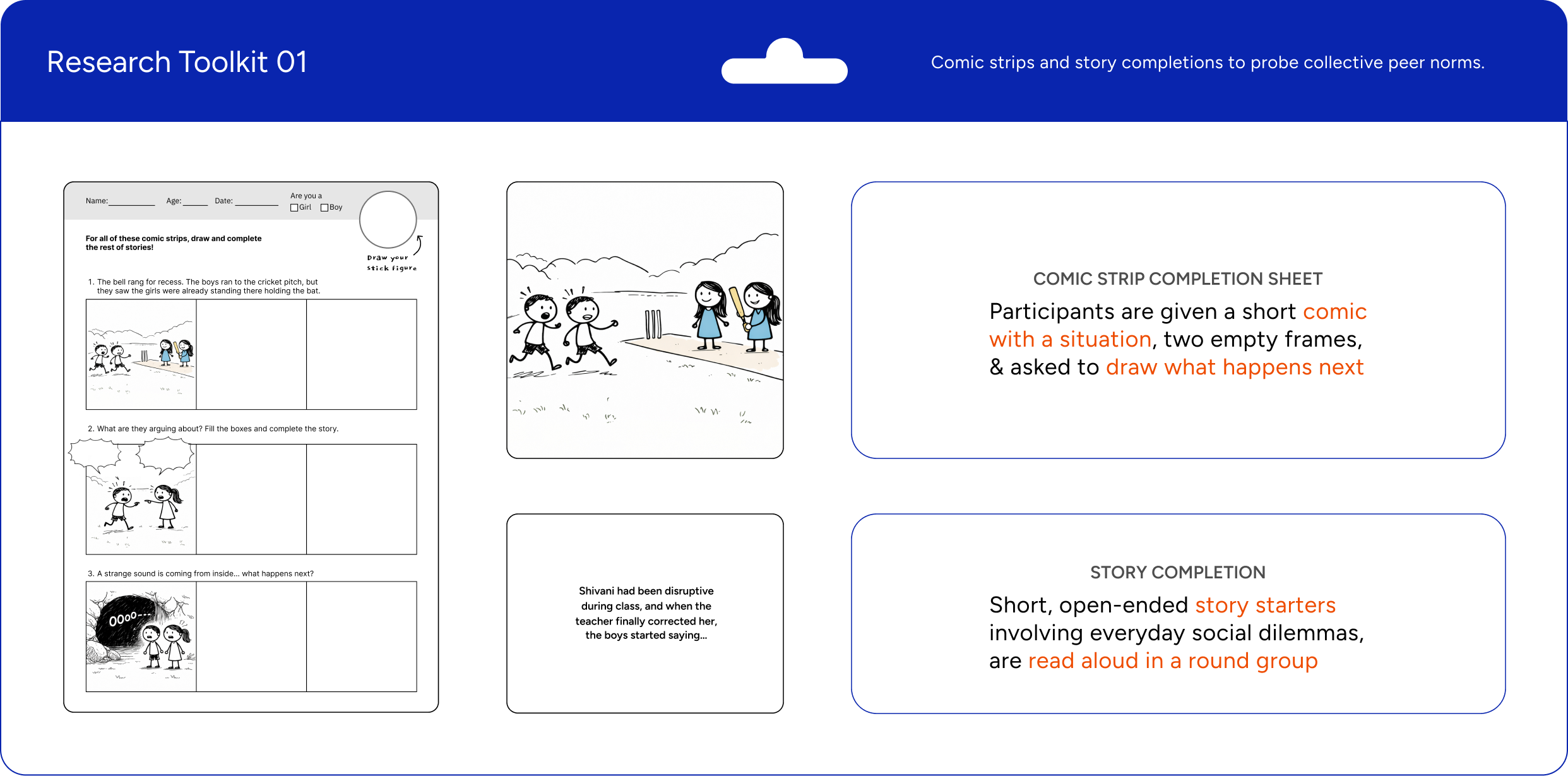
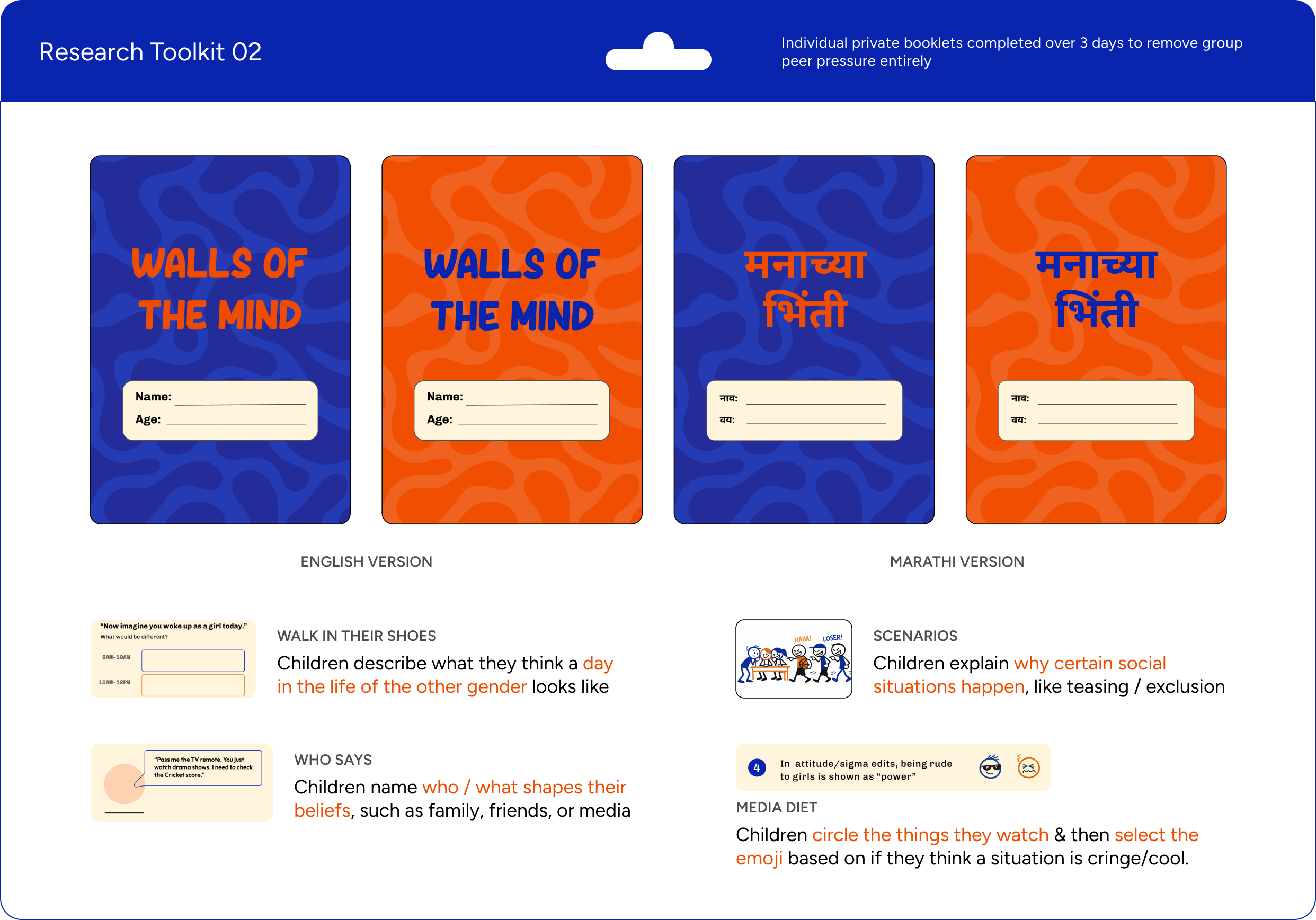
We gave the participants research toolkits: activities to draw, finish and fill in, so they show us what they think without having to say it out loud
(05) Research Progression in an Iceberg

Observational Study
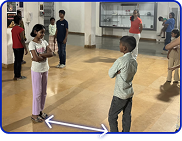
Observed organic play patterns to measure physical distance, & and what triggers self-segregation
Physical Hesitation
Children showed immediate physical hesitation: avoiding eye contact, freezing up, & instinctively retreating to same-gender comfort zones

 But why are they staying apart?
Research Toolkit 01
Used story-completion exercises to find out why they stay apart and which peer norms are behind it
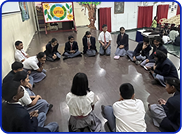
Vocal Group Performance
In front of their peers, exclusion became a loud, active performance, children policed one another to prove loyalty & protect their social standing
 But what is influencing these beliefs?
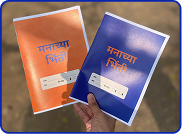
Research Toolkit 02
Focused on attitudes using 3-day individual booklets to extract unmasked thoughts away from peers.
Fear of Teasing
Children didn't dislike the other gender at all, they were just terrified that friendship would be teased as "romance"
 How did this become a habit every child follows
Systemic Conditioning
Seating, routines & adult language made separation look normal. Children learned following it was safe, & mixing needed someone's approval

Beneath the surface,
children aren’t rejecting each other,
they’re protecting themselves from judgment, teasing, and the
unsaid rules that make mixed-gender interaction feel unsafe.
(06) Key Insights
Girls want to cross into boys’ dominated spaces because they’re aspirational. Boys know, & aggressively defend these spaces
Collaboration is currency. Children will cooperate across genders if there is payoff or reward
When an adult is watching, children say and do the “right” thing. When the adult steps away, they go back to self-segregate
Which activities & friendships count as “acceptable” is policed by parents, siblings, grandparents, teachers & friends
Children often say they’d be friends with the other gender but avoid doing it, they’ll draw or imagine one, yet won’t sit, pair or play with one
(07) Analysis & Archetypes

SETTINGS CONSIDERED
• Supervised • Unsupervised • Mixed Group
• Boys only group • Girls only group
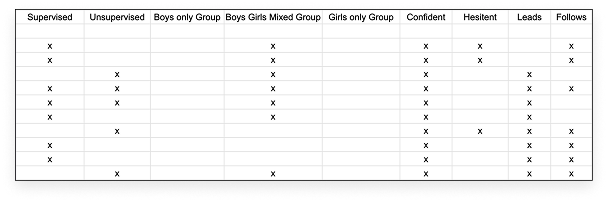
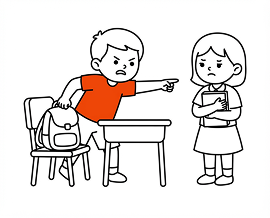
Taking charge enforcing strict group boundaries
Following the crowd to blend safely in
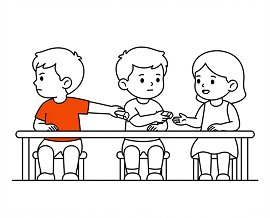
Laying low to avoid any unwanted attention
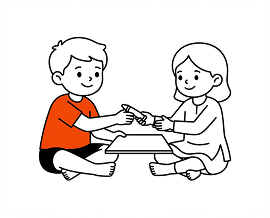
Giving & taking to reach shared success
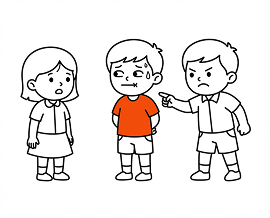
Pressure to enforce group norms
Fitting in gives emotional safety
High visibility of cross-gender mixing
Task requires cross-gender collaboration
Competitive motivation / winning
When a popular kid includes, others follow
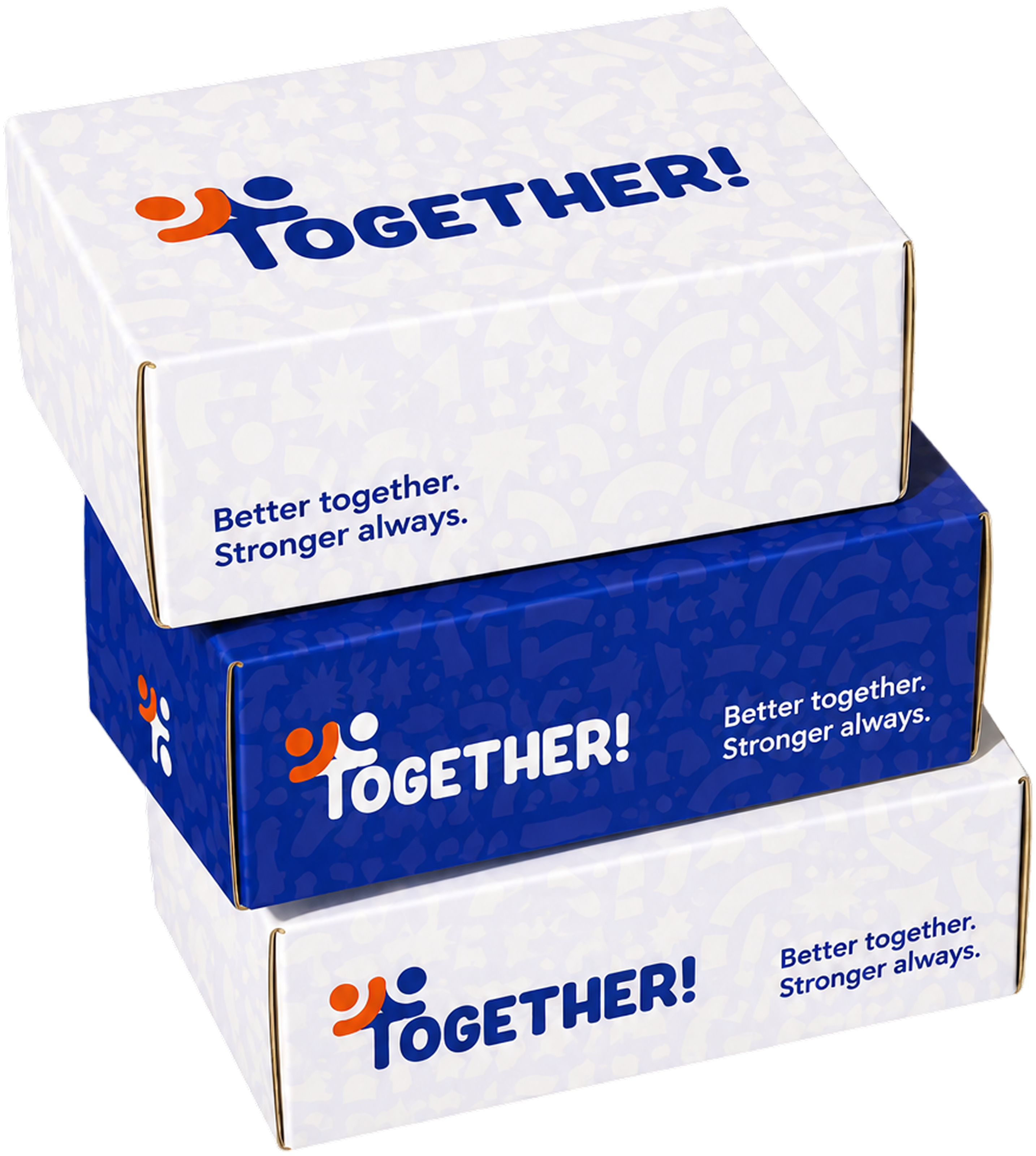

Together is a toolkit for teachers. It uses behaviour-building rituals to slowly change how children interact with the opposite gender.
PRESSURE SHIFTSNo child has to choose to include anyone, because the rule does it for them. Inclusion stops being a social risk and becomes part of the classroom routine. When a dominant child follows the ritual, the others follow too.
Toolkit Box

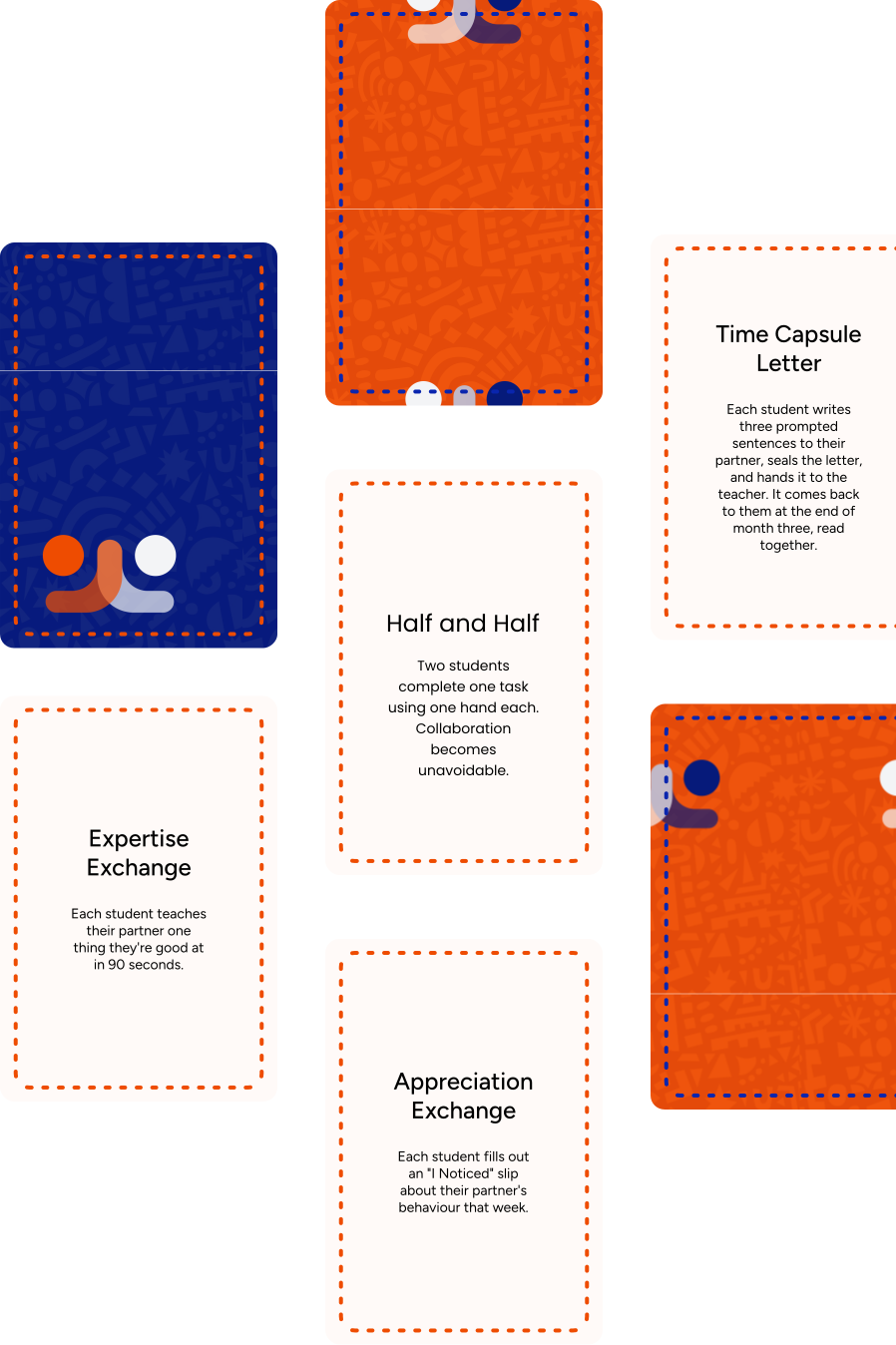
A classroom box split into daily, weekly, and monthly activities
The activity is in pairs, so inclusion becomes automatic & no one questions it
Instructions are inside the lid, takes under 5 minutes to conduct

Ritual Design
Quick warm-ups to get boys & girls talking so it stops feeling awkward
Hands-on team tasks where two kids have to cooperate to get it done
Makes mixed-gender interaction rule-based, repeated, and normal.
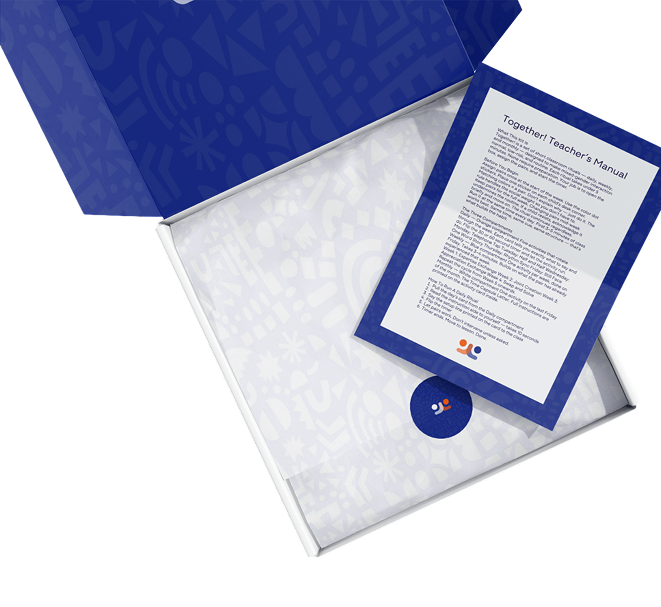
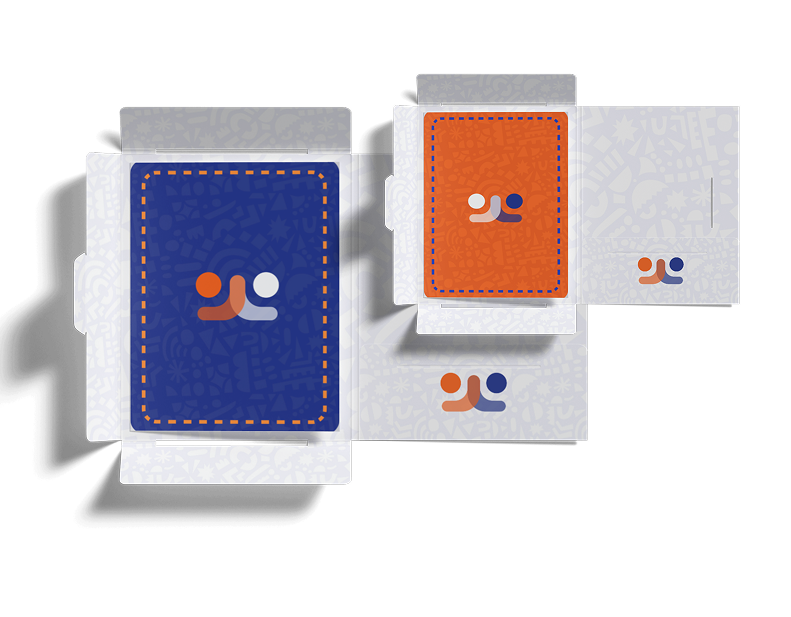
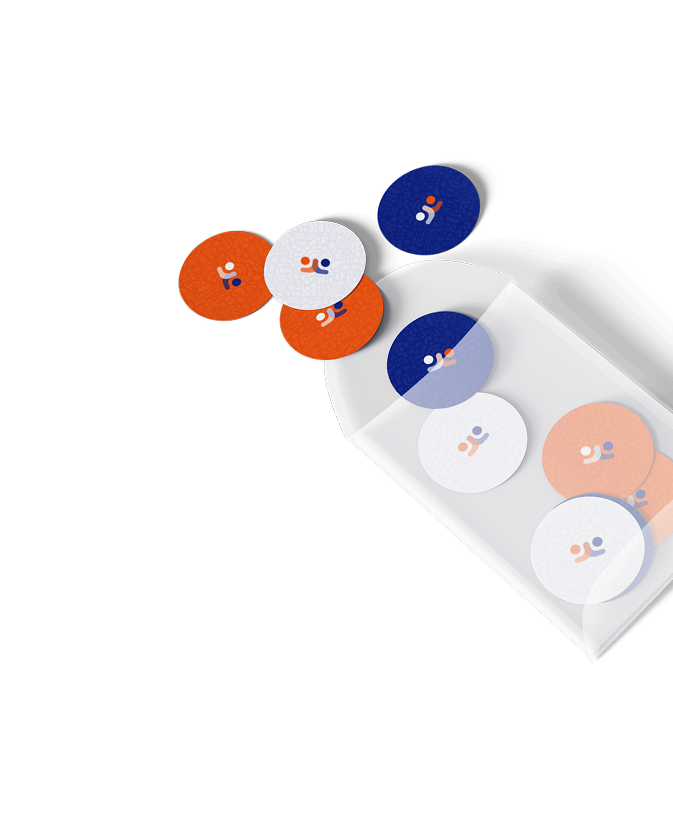
What’s Inside the Kits?
The kit is one box with three compartments Daily, Weekly and Monthly Each one holds everything that cycle needs, so the teacher can use it straight from the box
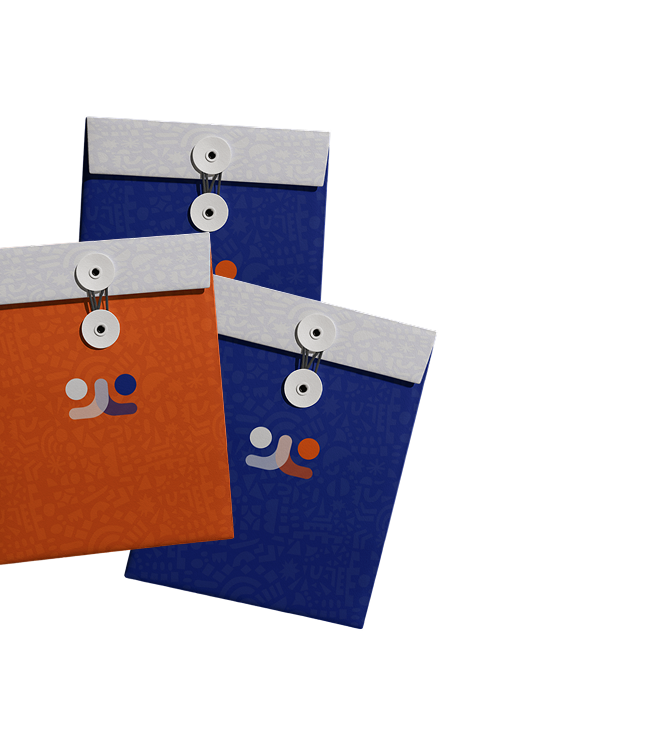
Daily
3-5 minute prompts that remove daily awkwardness and make talking to each other fun
Weekly
Hands-on team tasks that require active cooperation and build real familiarity
Monthly
Milestone rituals to reflect on shared progress and lock in long-term habits
Who uses the kit?
The first 3 to 5 minutes of class or during desk transitions, the exact moment when children choose their seats and split by default

How we’d know it’s working
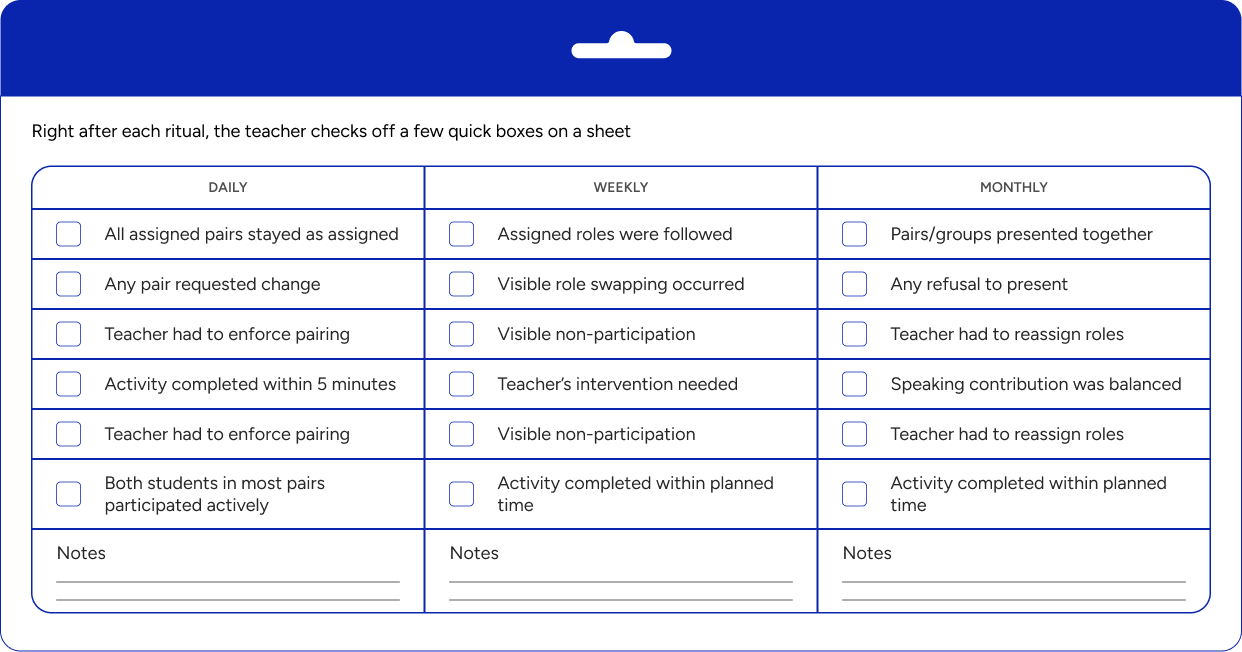
A 6 - 10 week run in one classroom, starting with a baseline week to observe normal seating and play patterns before using the kit
↑ Mixed-gender pairs form without the teacher prompting
↓ Hesitation or resistance when pairs are assigned
↓ Teacher steps in less each week
↑ Spillover: children mix on their own outside the ritual
 View
Case
Adding a feature, or changing who can use it, meant asking a developer and waiting. The more features, the longer the wait.
 View
Case
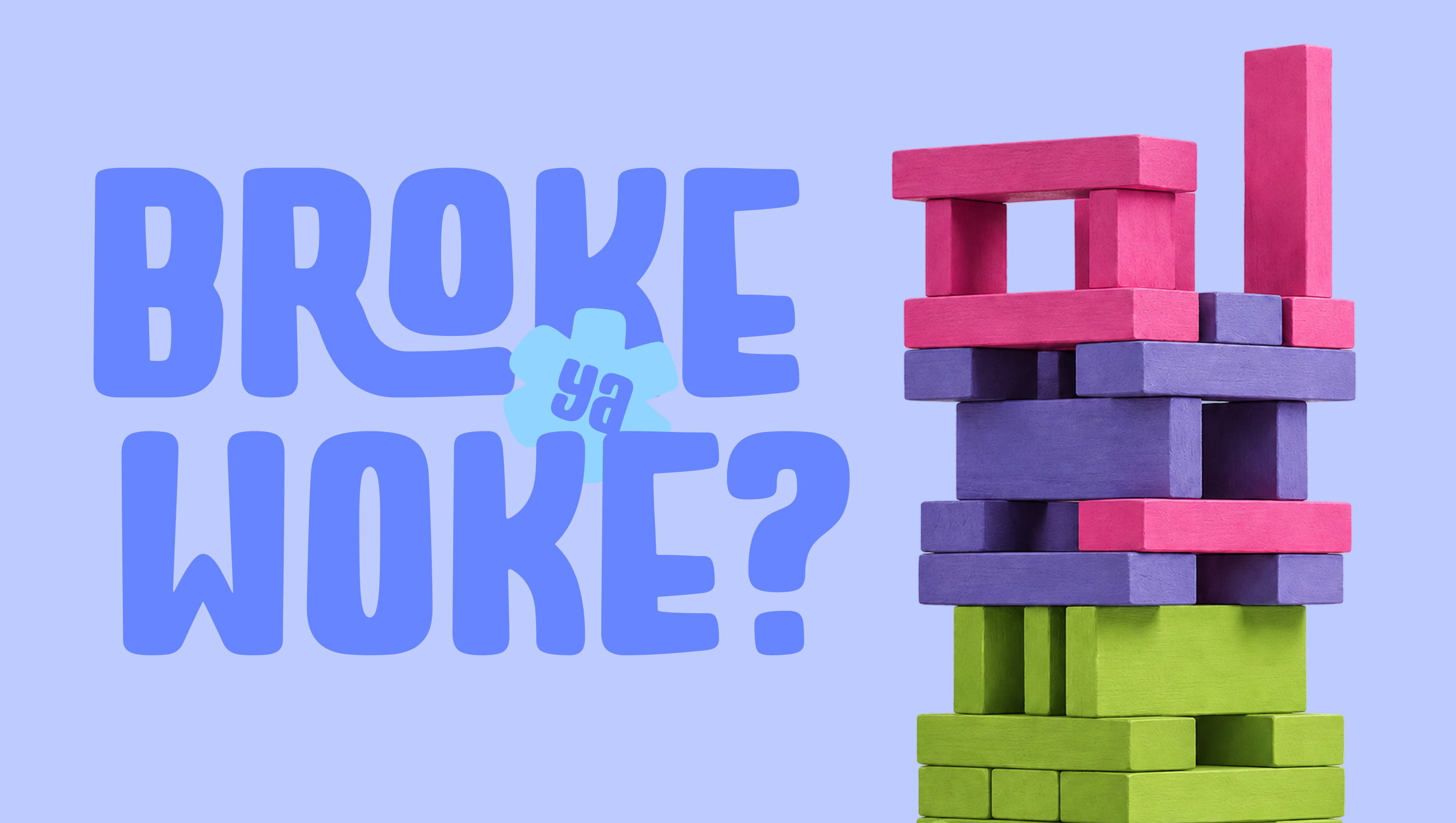
A game where bad money decisions make your tower wobble. Of 23 teens and 7 parents interviewed, the teens could tell a want from a need. Taxes sounded like something for later.
 View
Case
Sonia says “look for flights for this.” She never says where or when. Aris reads the group chat to work out what “this” means.